



NEW RELEASE

Discover content opportunities and turn them into evidence-backed drafts

Blazity builds a Content Creation Workflow around your existing knowledge, editorial rules, planning tools, analytics, asset providers, and CMS. It can suggest topics from performance and discovery signals, then produce briefs, drafts, SEO audits, metadata, and assets through a repeatable process with evidence and human approval.

iN SHORT

Connect discovery, production, review, and publishing into one workflow

What it does?

We map your content process, then build a workflow that can connect performance data, search insights, topic sources, editorial backlogs, organizational knowledge, brand rules, asset systems, and the CMS. Depending on the selected scope and available data, it can recommend opportunities, prepare a brief and structure, generate a source-backed draft, run configured SEO and editorial audits, and package approved content for your existing tools.

What is the outcome?

Editorial and marketing teams get a connected pipeline from discovery to CMS handoff. They spend less time repeating research, formatting, metadata entry, and copy-paste work while retaining supporting evidence, the right voice, visible audit results, and human editorial control before publication.

Who is it for?

Editorial, content, SEO, and marketing teams that want a workflow tailored to their current systems, data, brand voice, publishing model, risk level, and approval process rather than another generic text generator.
KEY FEATURES

What's in the box

1

Custom discovery signals from selected analytics, search, trend, feed, and planning sources

2

Brand, voice, portal, source-policy, and editorial profiles designed for your organization

3

Brief, outline, draft, critique, revision, and performance-informed suggestion workflows

4

Configured evidence, citation, style, SEO, structure, and internal-link audits

5

Integration with selected knowledge, planning, asset, communication, analytics, and CMS tools

6

Human approvals, CMS draft handoff, feedback history, and workflow performance dashboards

MEET THE AUTHORS

Who’s behind the code

photo of Jakub Czapski, COO & Co-founder at Blazity
Jakub Czapski
COO & Co-founder
Photo of Jakub Jabłoński, CTO at Blazity
Jakub Jabłoński
CTO

How it works

The problem with disconnected content production

Content teams often repeat the same work across topic discovery, performance review, research, briefs, drafts, SEO checks, images, metadata, and CMS entry. Useful signals live across analytics, search tools, editorial calendars, documents, communication tools, previous campaigns, websites, and internal knowledge.

A text generator alone does not connect those signals, preserve evidence, apply the correct editorial policy, or produce a complete package ready for a real publishing workflow.

The result is a disconnected process: topic choices are separated from performance evidence, first drafts still need extensive review, and teams repeat formatting and CMS work after the writing is done.

How Content Creation Workflow solves it

Blazity turns the selected editorial process into a controlled workflow built around your current tools. Together, we define the discovery inputs, allowed sources, voice, structure, SEO rules, content policy, review gates, asset process, performance feedback, and publishing fields required for the chosen use case.

The workflow can analyze selected article-performance, search, content-gap, feed, or editorial-backlog signals to suggest topics and improvements. It then researches the approved topic, stores claim-to-source evidence, proposes a brief and outline, generates the draft, and runs the configured evidence, citation, style, structure, SEO, and internal-link audits. Claims that lack required evidence are flagged or blocked and routed to an editor; the audits do not guarantee factual correctness.

After article approval and explicit asset selection or licensing where required, the workflow prepares the article body, titles, descriptions, tags, categories, author data, internal links, and assets as a complete draft in the selected CMS. Publication remains an editorial decision.

Architecture overview

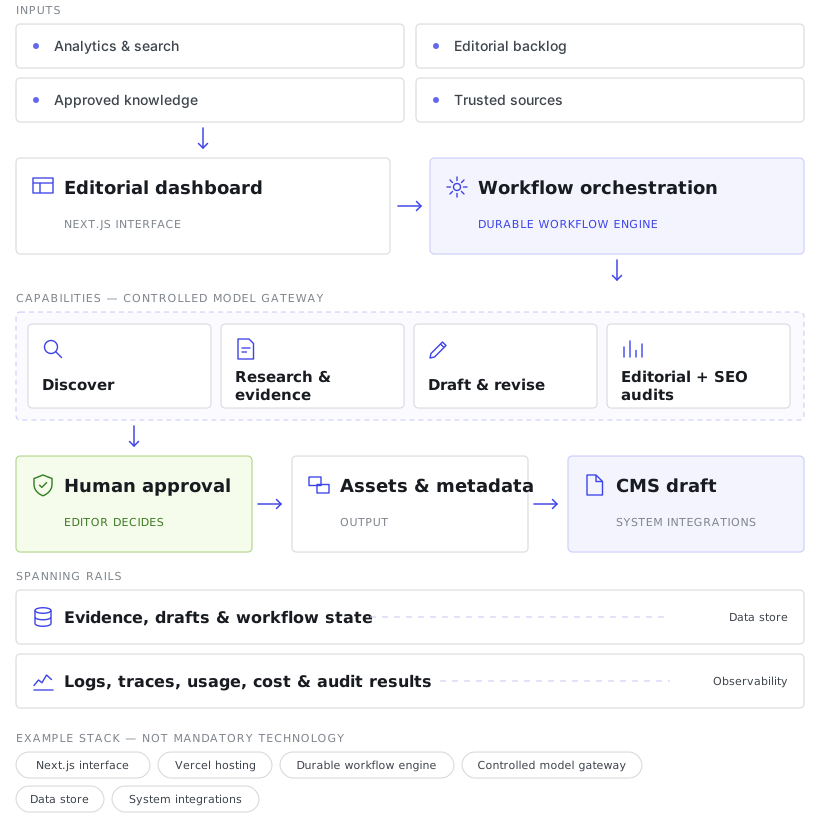
1. Discovery and editorial context layer

Selected analytics, search, feeds, planning tools, editorial backlogs, and content history can provide discovery and performance signals. The workflow combines them with approved organizational knowledge, source policies, voice guides, examples, templates, and publishing schemas for the chosen brand, author, or portal.

2. Research and evidence layer

Research steps gather trusted sources, preserve evidence snapshots, and map important claims to their support. Higher-risk content can require editorial evidence approval before drafting begins, while unresolved claims remain visible to the editor.

3. Content orchestration and audit layer

Specialized steps prepare the brief, outline, draft, critique, and revisions. Configured evidence, citation, style, SEO, structure, internal-link, and policy audits route problems back to the correct step with bounded correction loops.

4. Editorial approval and delivery layer

Editors review the draft, evidence, audit results, metadata, and asset options. After explicit approval and any required licensing step, content is packaged into the configured CMS as a complete draft. Editorial feedback, draft-to-final differences, workflow metrics, and selected performance data can inform future suggestions without silently changing approved rules.

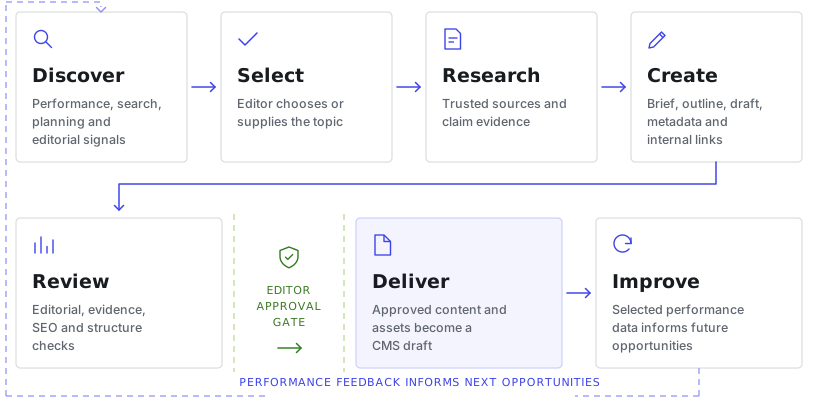
From opportunity to CMS draft

  1. Discover — Review selected performance, search, content-gap, and editorial signals.
  2. Research and create — Gather trusted sources, prepare the brief, and generate the draft.
  3. Review — Run configured evidence, editorial, SEO, and internal-link checks.
  4. Deliver — After editorial approval, package the content, metadata, and selected assets as a CMS draft.

Get started

Step 1: Map discovery, creation, and publishing

We map how your team finds opportunities, selects topics, researches, writes, reviews, sources assets, performs SEO checks, enters content into the CMS, publishes, and evaluates article performance.

Step 2: Design and build the custom workflow

Blazity connects the selected systems and implements discovery inputs, editorial profiles, research and drafting stages, evidence rules, SEO audits, approval gates, metadata mapping, asset handling, CMS handoff, and the feedback signals required for the chosen scope.

Step 3: Pilot, review, and improve

We run representative topics through the complete workflow, compare generated drafts with editor-approved versions, verify the CMS package, and measure time, corrections, audit failures, cost, and editorial acceptance. The workflow expands only after the pilot is reliable.

Common extensions

  • Discovery from analytics, search, trend, feed, competitor, and editorial-planning signals
  • Article-performance analysis with topic, refresh, structure, and internal-link suggestions
  • Additional CMS, knowledge, research, communication, planning, and licensed-asset integrations
  • Multi-author, multi-brand, multi-portal, multilingual, and market-specific editorial profiles
  • Approval-gated adaptations for social, email, campaign, and sales channels
  • Enterprise permissions, audit policies, cost controls, workflow metrics, and custom integration adapters

Outcome

Content Creation Workflow gives organizations a tailored production system connecting discovery, evidence-backed creation, editorial review, and publishing operations.

Discovery, performance signals, research, drafting, SEO audits, review, metadata, assets, and CMS handoff become one visible process. Editors can see why a topic was suggested, where claims came from, which checks passed, what changed, and what still requires judgment.

The workflow reduces repetitive content operations while adapting to the tools and rules the team already uses. It preserves the two things that matter most: trusted evidence and human editorial ownership.

Before you talk to us

FAQ on Content Creation Workflow

What is Content Creation Workflow?

Content Creation Workflow is a custom AI-assisted editorial process that can connect discovery signals, trusted sources, organizational knowledge, drafting, SEO and editorial audits, assets, approvals, and CMS delivery around your existing content operation.

Can it suggest topics from article performance and discovery data?

Yes, when the required data is available and reliable. A tailored workflow can analyze selected analytics, search, content history, feeds, trends, and editorial-backlog signals to suggest new topics, refresh opportunities, structural improvements, and internal-link candidates for editorial approval.

Can the workflow use our brand voice and internal knowledge?

Yes. Each editorial profile can include approved knowledge sources, voice guides, accepted and rejected examples, templates, terminology, source policies, and prohibited patterns. The workflow loads the selected profile before research or drafting begins.

Can it connect to our existing content and SEO tools?

Yes. The implementation is designed around the tools you already use. Blazity maps the required knowledge, analytics, search, planning, communication, asset, and CMS integrations, then builds only the adapters and handoffs needed for the approved workflow.

How does it protect accuracy and editorial control?

Research steps preserve source evidence and connect important claims to their support. Configured audits flag or block claims that lack the required evidence and route unresolved questions to an editor; they do not guarantee factual correctness. The workflow prepares a CMS draft, while an editor decides whether and when it should be published.

OTHER SOLUTIONS

More open-source tools from our production work

Marketing Knowledge AI Agent

Open-source AI marketing agent designed to organize your company's knowledge, find relevant business information, and manage marketing workflows across your systems and communication tools.

AI Workflow

AI Workflow is a free, open-source platform for connecting agents, tools, checks, approvals, and notifications into repeatable workflows. Use it to build issue-triage, code-review, team-notification, and other operational workflows while tracing actions, usage, and cost from one dashboard.

Issue Triage Workflow

Blazity builds an Issue Triage Workflow around your support desk, observability stack, services, codebases, ownership model, and severity policy. It can detect likely false positives, gather proof, create reproduction steps, classify impact, and prepare the safest next action for human review. It works with least-privilege access and never merges or deploys.

WHY BLAZITY

Why choose Blazity as your partner?

icon certificate

Certified Experts

Vercel Gold Partner – one of 11 worldwide. Certified on the same AI Cloud stack we build with you.
icon ai code

AI-Native Delivery

We put our AI engineering tools inside your development – with governance, speed & quality gates.
icon agreement

Trust Before Engagement

Test our OSS libraries, check our partners, or talk to our clients before you commit.
icon ownership

We Own The Outcome

Engineers who think like owners. Proactive, accountable, and quality-obsessed.
CONTACT US

Start with the problem. We'll get to the architecture.

Describe your project and an architect will get back with a straight take on what's worth doing and where to start. 12-hour response time.

TRUSTED BY
“Not sure if it's an AI agent problem, a workflow problem, or an architecture problem? We'll figure it out in one call.”
The Controller of your personal data is Blazity Sp. z o.o. with its registered office at Warsaw, Poland, who processes your personal data for marketing purposes. You have the right to data access, rectification, erasure, restriction and portability, object to processing and to lodge a complaint with a supervisory authority. For detailed information, please refer to the Privacy Policy.
*Required fields.
Thank you.
Your submission has been received.
Oops! Something went wrong while submitting the form.