


No more stalled builds, broken deploys, or performance issues buried in the framework. We migrate safely to Next.js.









Whether it's Magento, legacy React/Redux, WordPress, or a custom SSR setup — if your team is stuck on a stack that's holding you back, these problems probably look familiar.
All engineering time goes to maintenance — bugs, patches, workarounds. What doesn't go to maintenance goes to waiting. 20-30 minute builds. 15+ minute deploys. Nothing ships.
Business logic in the frontend. State management nobody fully understands. Your senior developers are the only ones who can safely make changes — and they're spending all their time doing it.
Slow pages, poor Core Web Vitals, client-side rendering that hurts rankings. The performance ceiling is the architecture itself. You can't optimize your way out of it.
New features, new integrations, new markets — your business has plans the architecture can't support. Marketing waits on engineering for every content change.
Four problems, one root cause, one migration to Next.js.

Legacy stacks rarely fail in just one place. Slow builds make deploys risky. Risky deployments slow the team down. The team slows down and performance never gets addressed. These aren't four separate problems — they're one system failing. And the longer it runs, the more your team fears changing any of it.
We assess your codebase with codified tooling from dozens of migrations, determine the right path — incremental or full rebuild — and execute while the business keeps running.


12-hour response time. We'll tell you what's worth building before you commit.
The problem changes from project to project. The process doesn't. Expand each step to see what it looks like in practice.

Automated route extraction, component inventory, dependency mapping — not a best guess. The assessment determines the right path — incremental or full rebuild. Scope, sequence, and risk mapped before work begins.
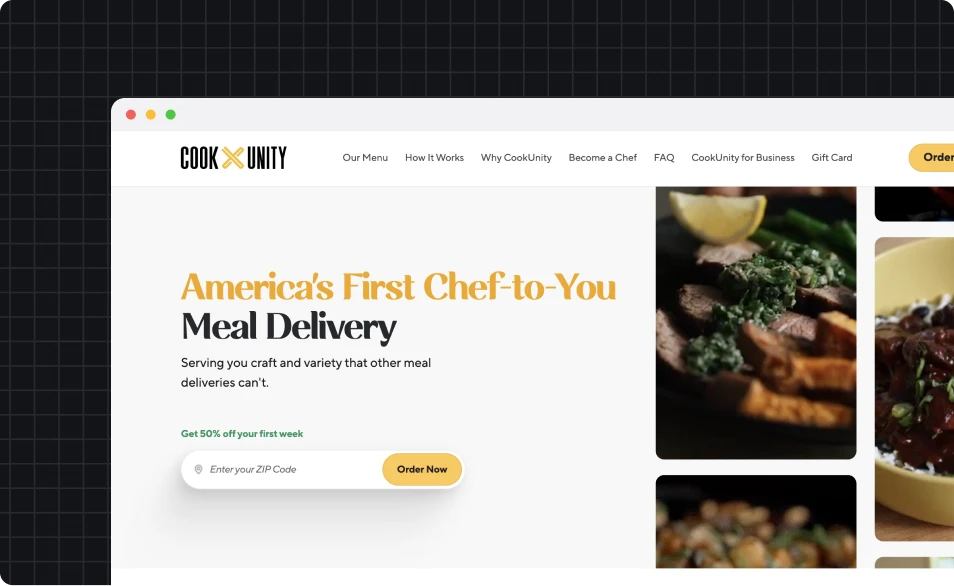
Route by route or full rebuild — depends on the codebase. Proven paths from Magento, legacy React/Redux, WordPress, and custom SSR. CookUnity's signup funnel ran on parallel systems while we rebuilt in Next.js. Monthly deploys became daily. No downtime.
Business logic in the frontend. State management nobody fully understands. Fragmented modules requiring 5x effort for every change. We separate concerns, modernize state, and unify the codebase into something your team can own.
Migrations kill rankings when done wrong. Redirect logic, crawl budget, dual-running risks — we manage all of it. Planday: "especially migrations, where you have SEO and organic rankings that need to be maintained."
We treat migration as a performance reset. SSR, ISR, or PPR — chosen per route based on what the page needs. CookUnity improved responsiveness by 70%. Conversions rose 28%.
The migration isn't done at cutover. We monitor real-user performance, catch regressions early, and make sure the new architecture holds under production load. Planday's site became easier to operate and develop — unlocking growth opportunities the old stack blocked.



Migrate route by route on a parallel setup, so your current site keeps running until each part is proven on Next.js. Our six-step process covers assessment, parallel migration, state and architecture overhaul, SEO preservation, performance, and post-migration monitoring. We've migrated stacks like WordPress, Magento, and legacy React without disrupting what already works.
It depends on the size and integration complexity of the current stack, but enterprise migrations typically run a few months – for example, CookUnity's migration landed in about 3 months. We give you a timeline against your actual scope after a short assessment.
Standardize the migration so many sites share one architecture, codebase, and component set – then roll them out through a repeatable process instead of rebuilding each from scratch. In Iberion, we consolidated 15 WordPress sites into a zero-downtime migration on this model, now serving 150M+ monthly visits.
Move to Next.js, where server rendering and caching let you serve high traffic without your CMS becoming the bottleneck. You keep content editing in a headless CMS while the frontend scales independently – and we can migrate without losing your existing SEO rankings.
Describe your project and an architect will get back with a straight take on what's worth doing and where to start. 12-hour response time.